
Five Showroom Metrics That Reveal What Customers Want
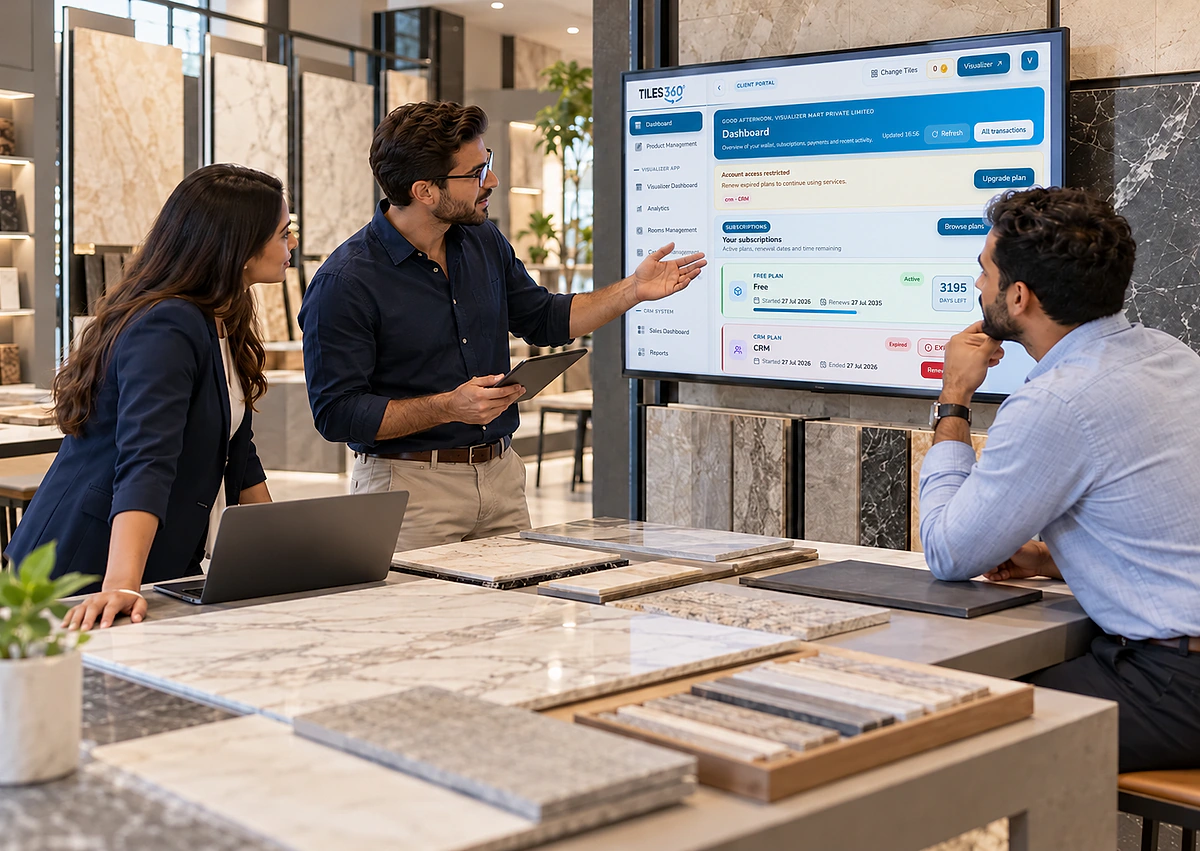
Good showroom decisions become easier when customer behaviour is visible. Digital touchpoints can reveal which collections attract attention, where buyers hesitate, and which activities lead to an enquiry or specification.
Five signals worth tracking
- Most viewed collections: identify the ranges creating early interest.
- Most visualized products: see which tiles customers want to experience in a room.
- Frequently saved combinations: understand how floors and walls are being paired.
- Enquiry conversion: measure how often browsing becomes a sales conversation.
- Follow-up progress: monitor the movement from first contact to quotation and decision.
Useful metrics explain customer intent; they do not simply count activity.
Use insight to improve the showroom
Review these signals regularly with sales and merchandising teams. A popular digital collection may deserve more physical display space, while a product with strong views but few enquiries may need clearer information or better sample availability. Small adjustments based on real behaviour can improve both the customer journey and team performance.
Turn reports into regular action
Choose a reporting rhythm your team can maintain, such as a short weekly sales review and a deeper monthly merchandising review. Compare trends over time instead of reacting to a single busy day or campaign spike.
Combine digital behaviour with feedback from showroom conversations. When view data, sample requests, quotations, and staff observations point in the same direction, you have stronger evidence for changing displays, stock priorities, or promotional activity.